What Is Forestry Mulching?
The fastest, cleanest way to clear land in Oklahoma — and why most landowners haven't heard of it until they need it.
The short answer
Forestry mulching is a single-machine land clearing method that grinds trees, brush, and vegetation into mulch on-site — no burning, no hauling, no debris piles.
How It Works
The Basics of Forestry Mulching
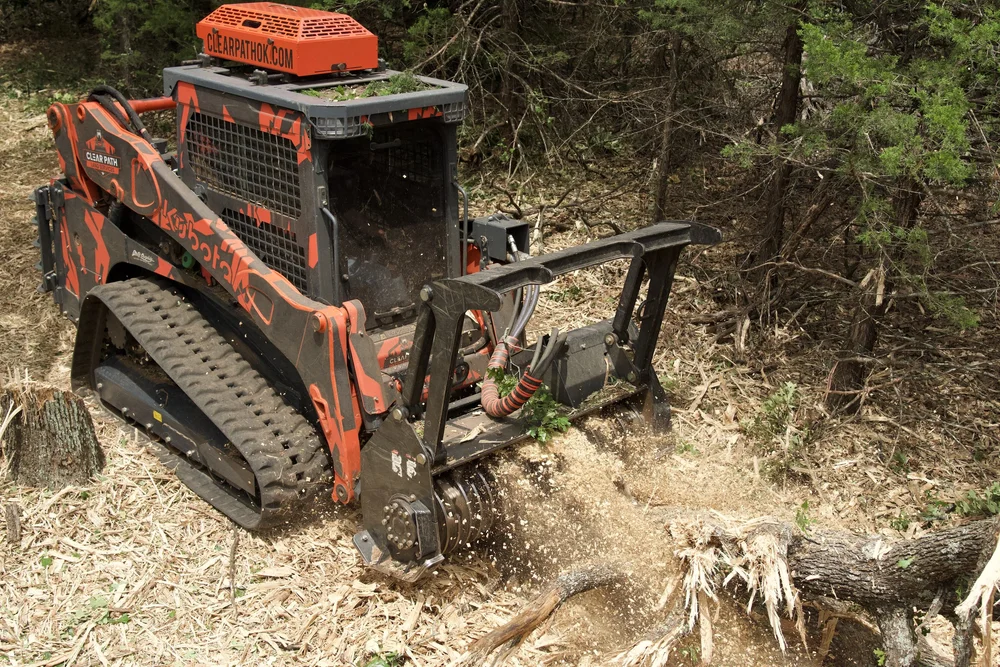
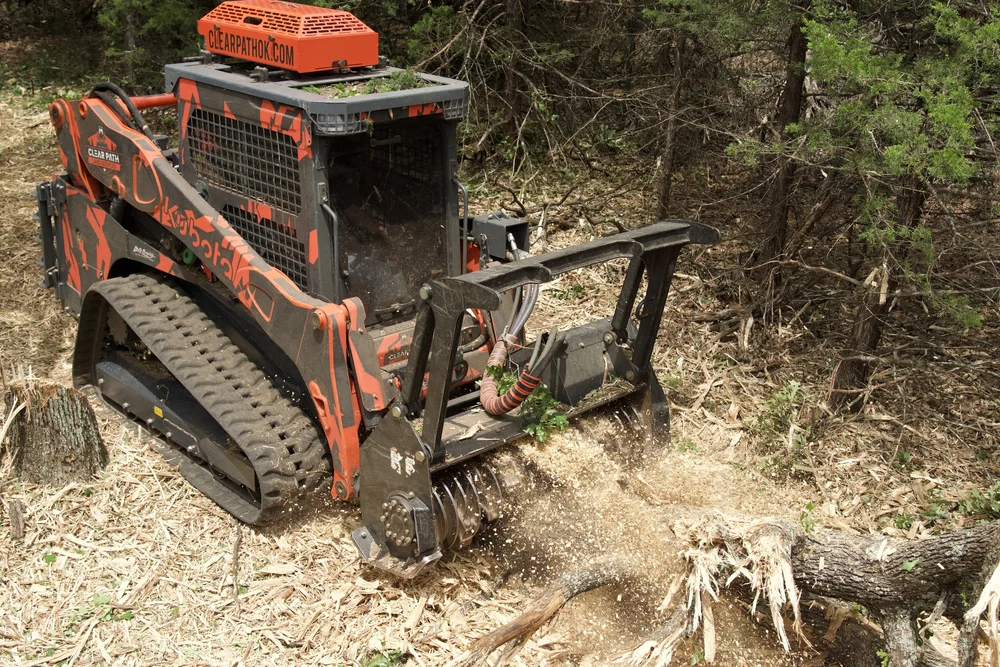
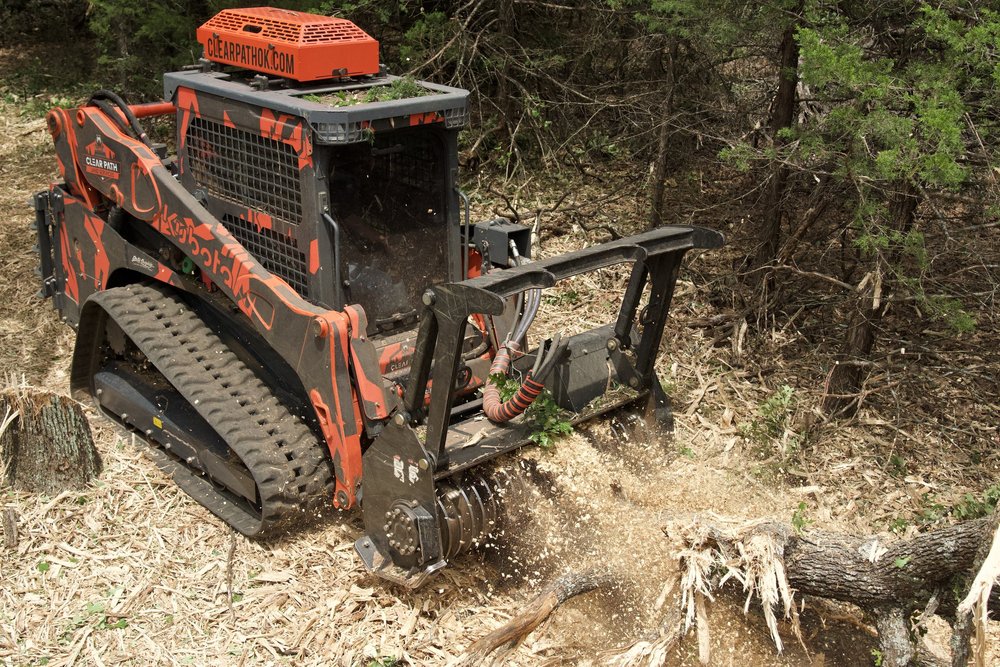
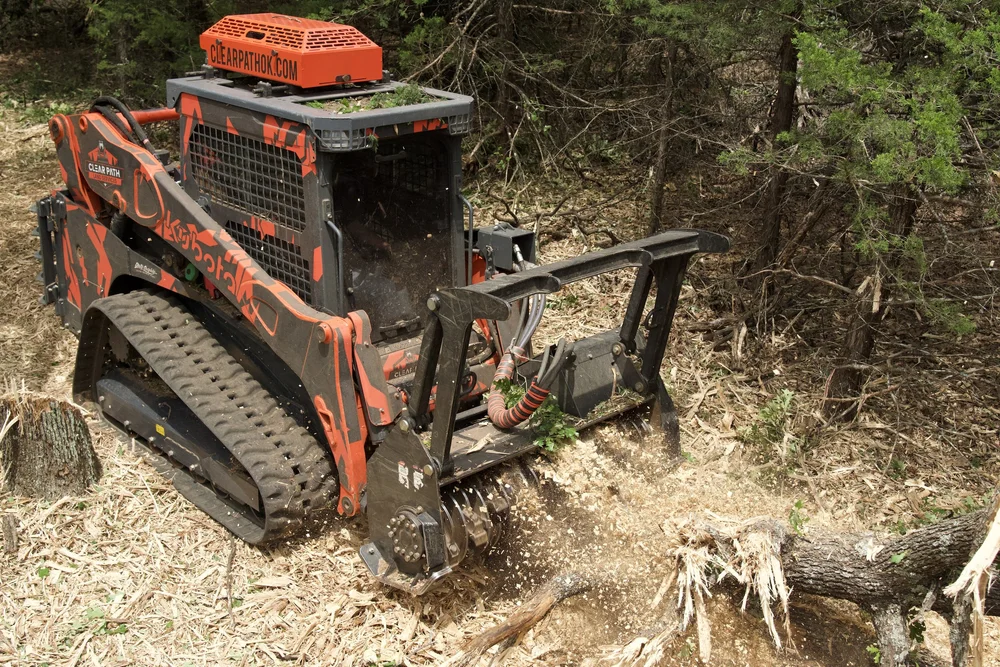
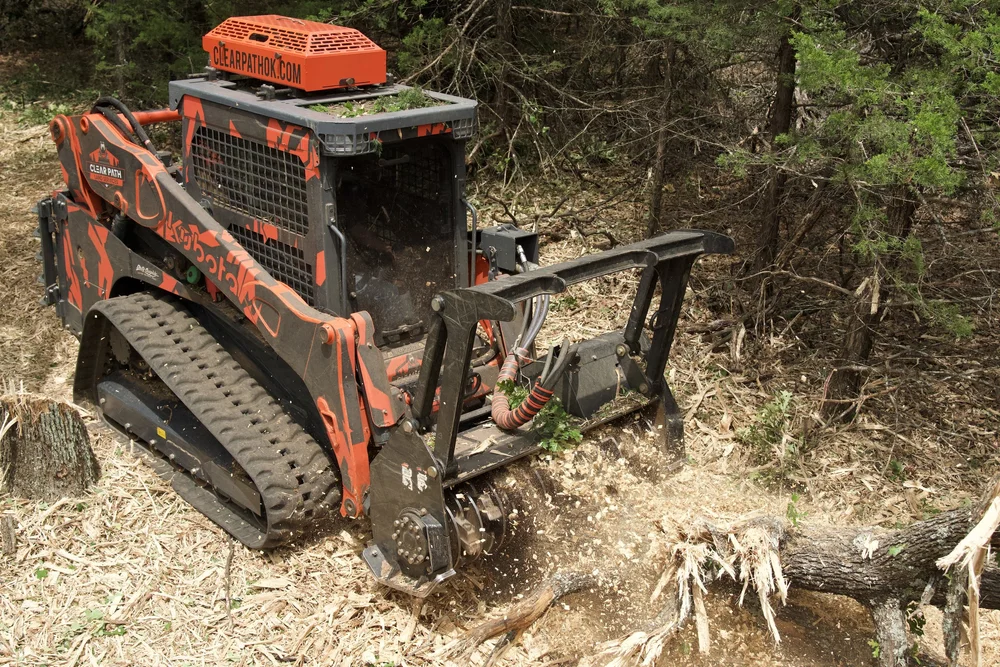
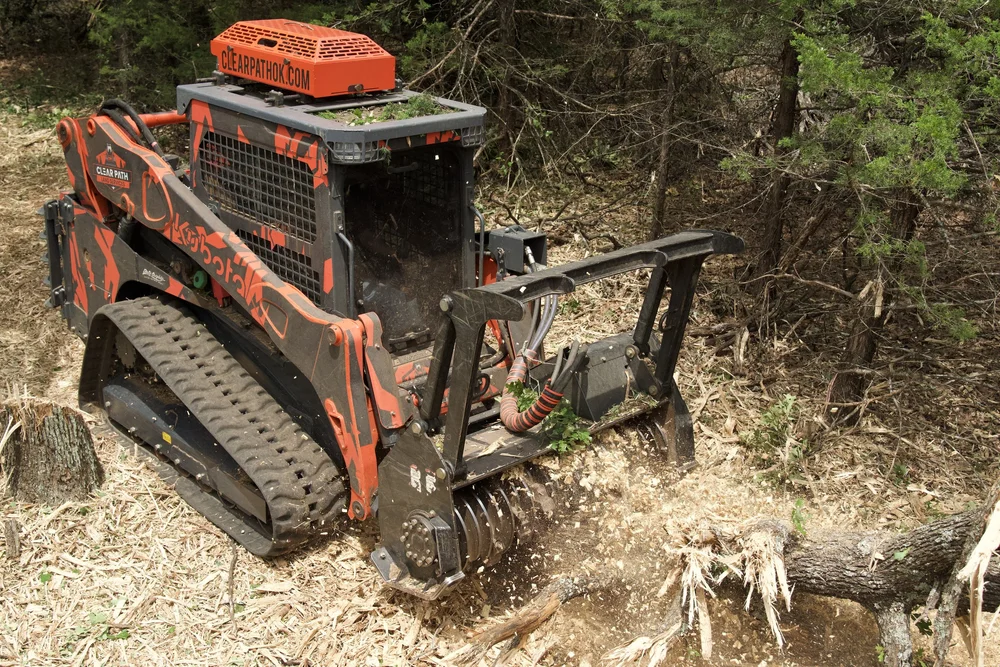
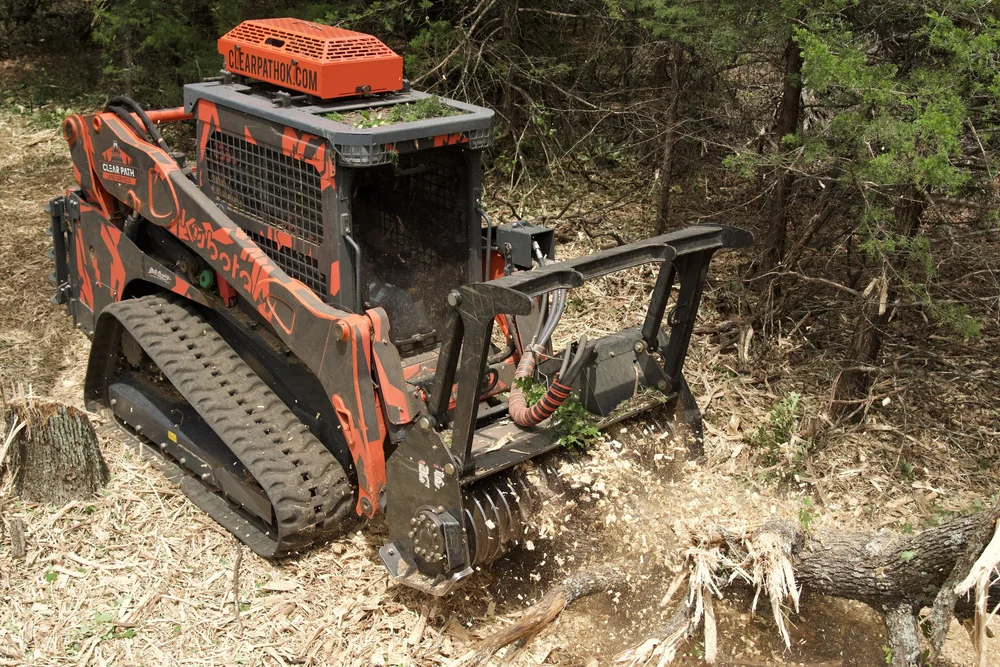
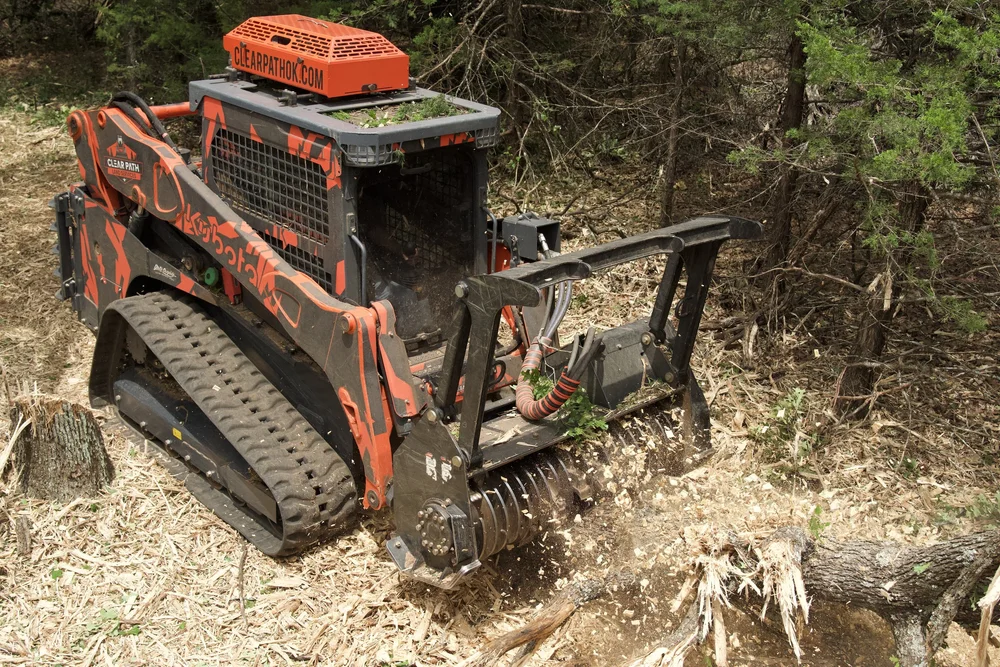
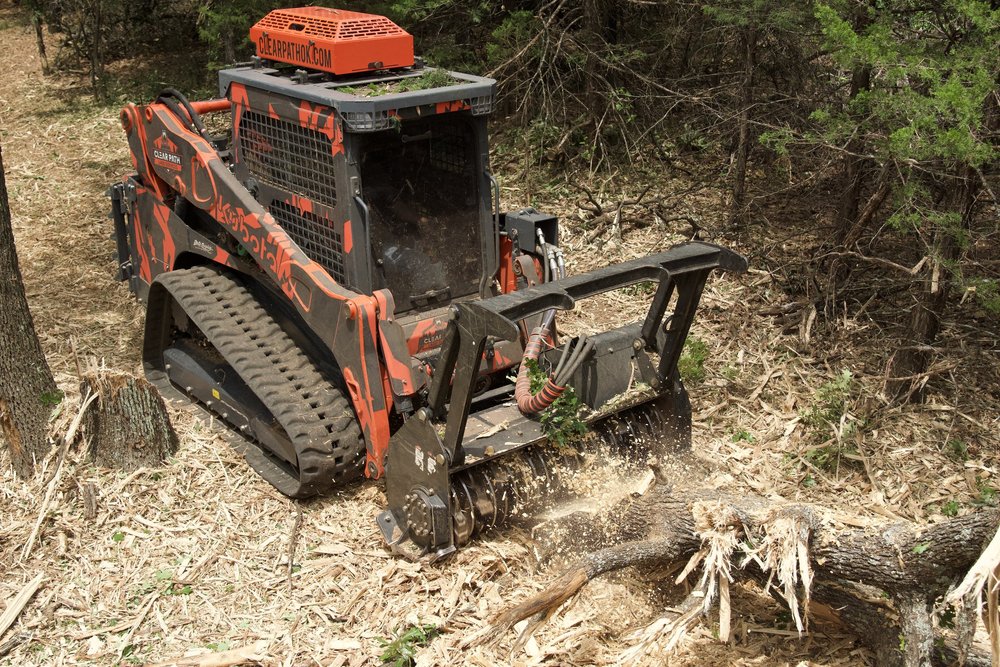
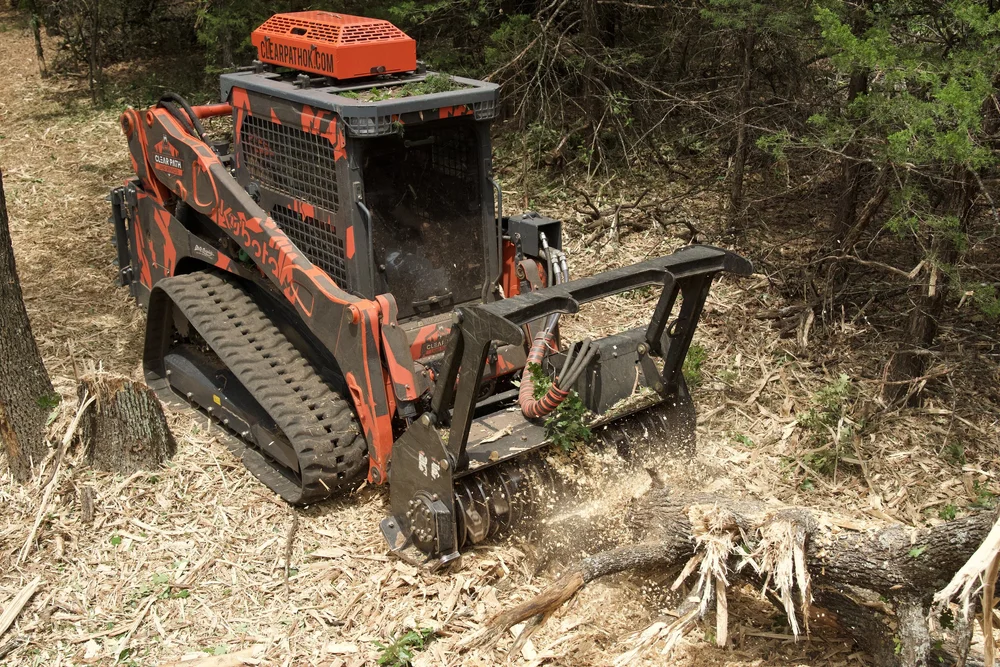
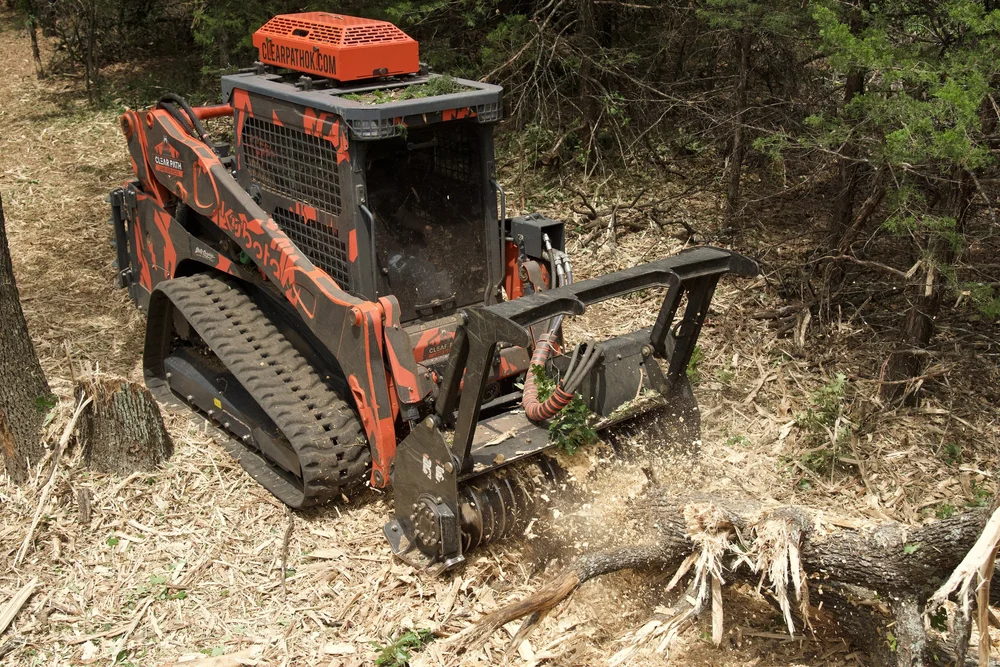
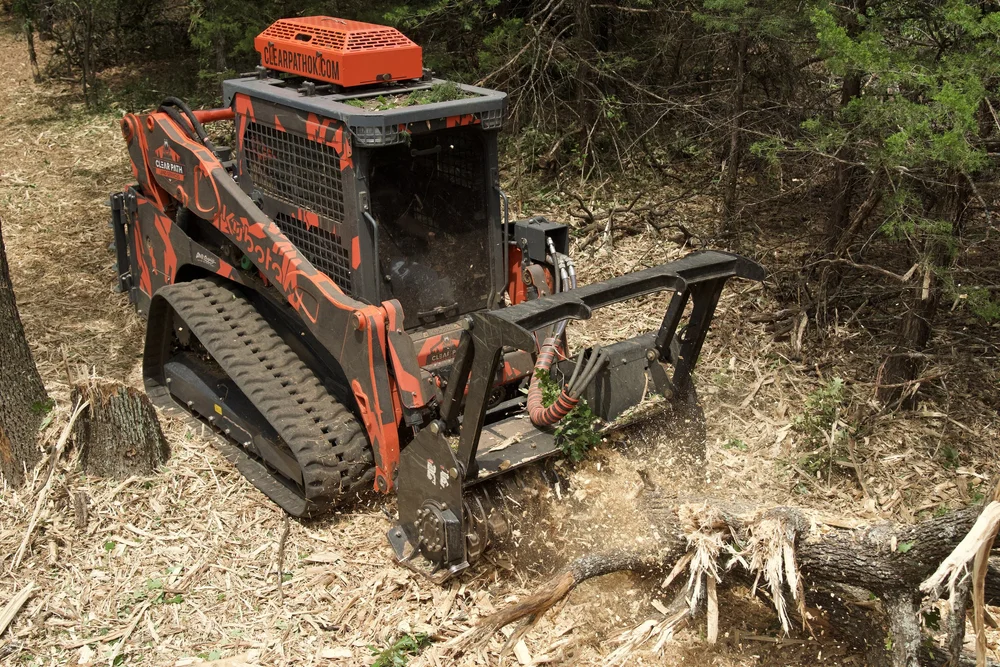
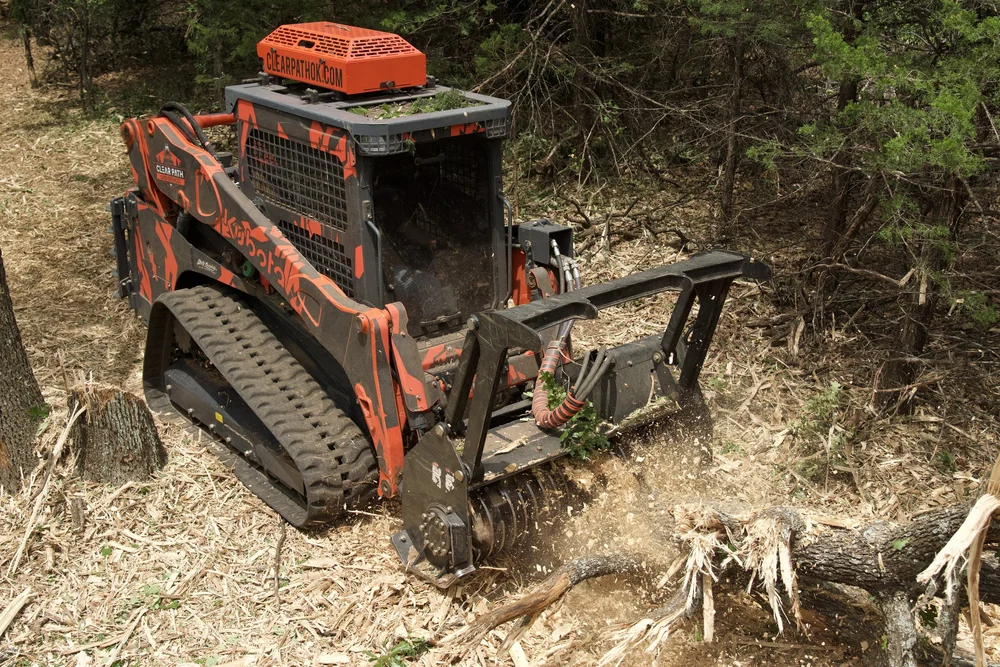
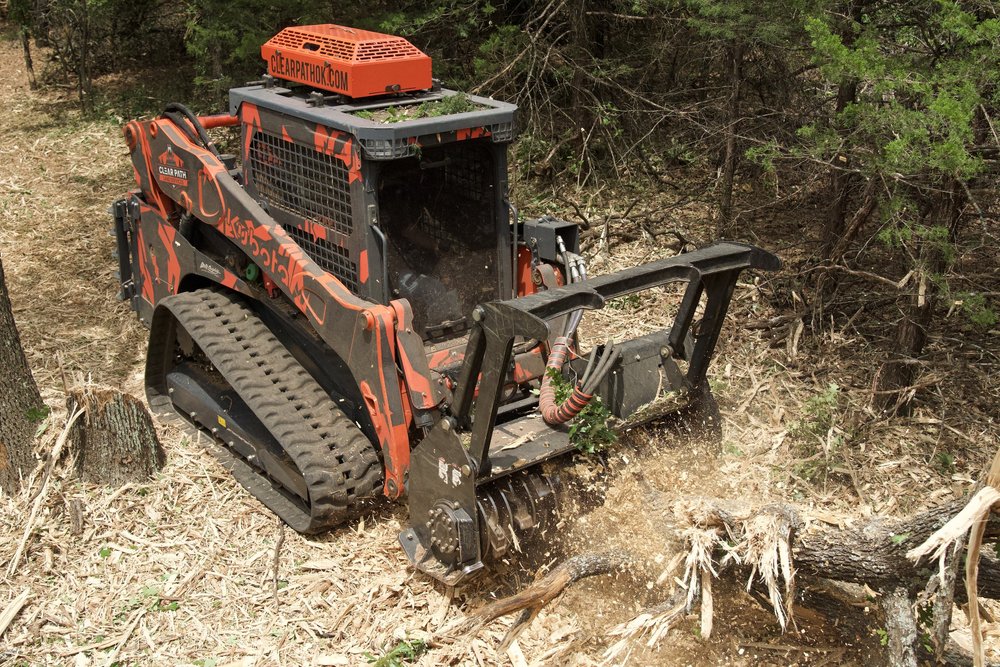
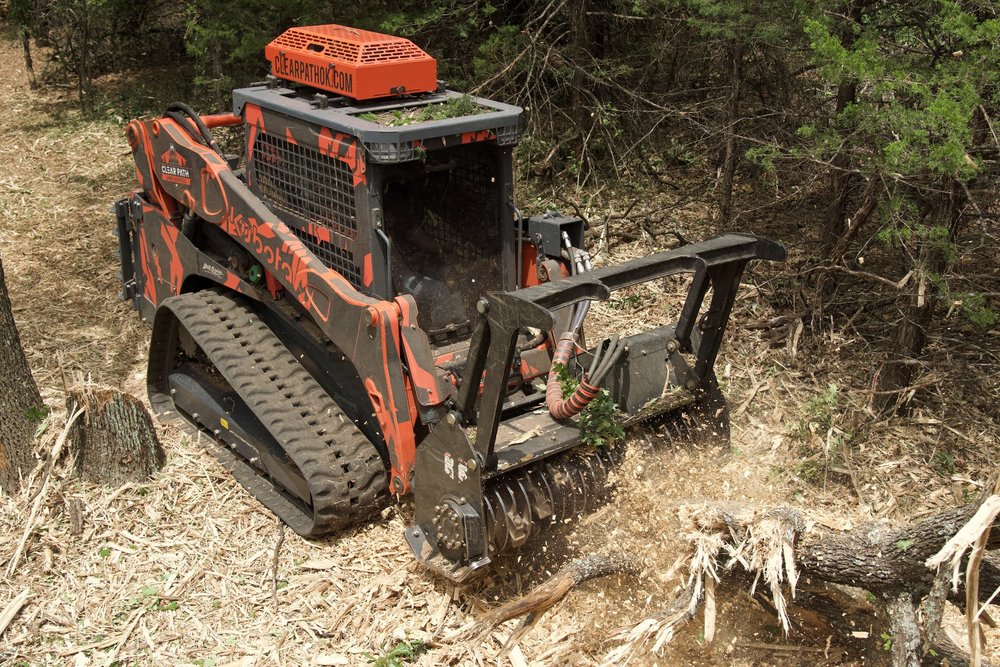
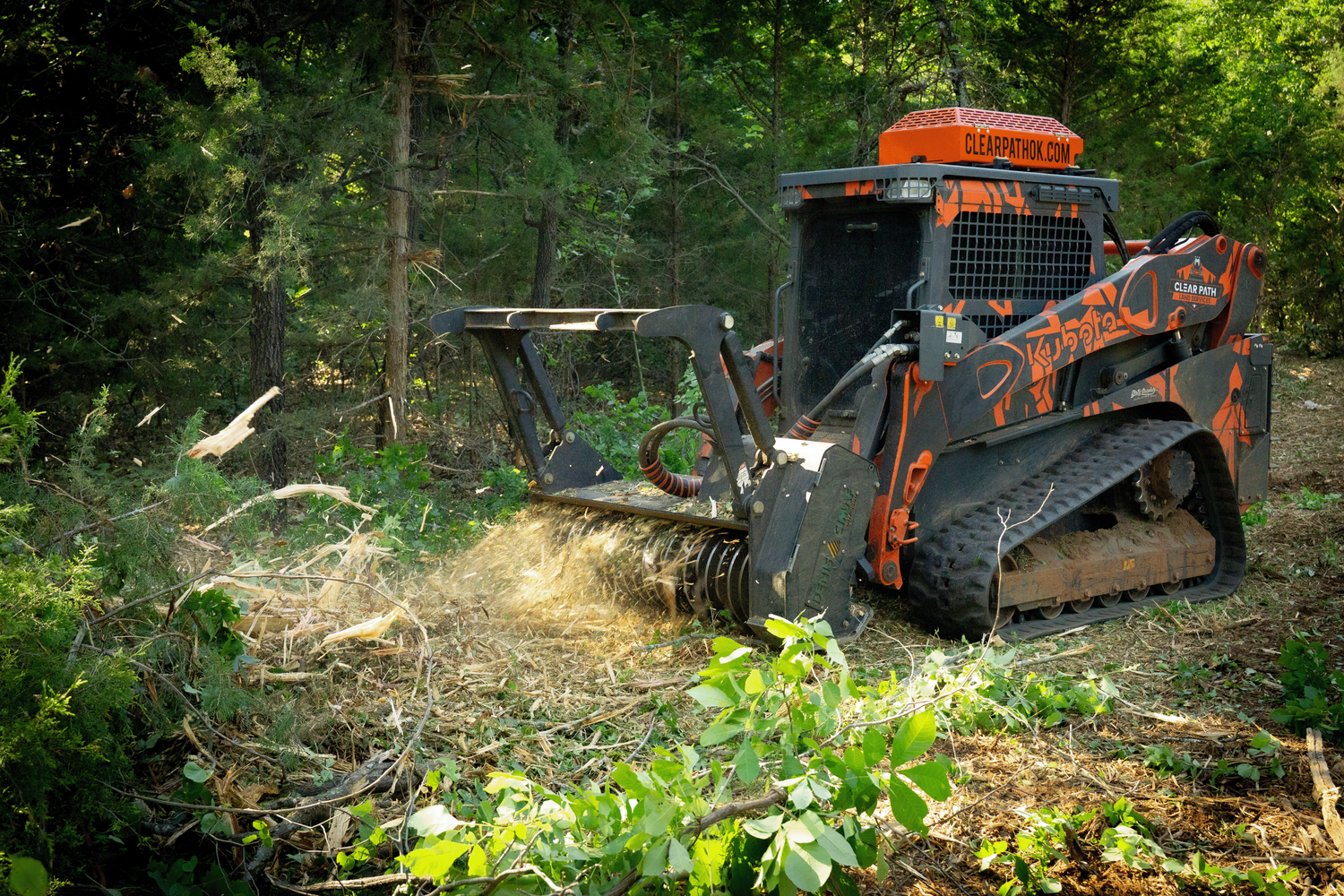
A forestry mulcher is a machine — mounted on either a skid steer or an excavator — with a rotating drum fitted with carbide-tipped steel teeth. When the drum engages a tree or brush, it grinds the entire plant — trunk, limbs, root crown and all — into small chips of mulch that fall directly onto the ground where the tree was standing.
That's it. One machine, one pass, everything processed on-site. No cutting, no stacking, no hauling, no burning. The mulch layer left behind is typically 2–4 inches deep and breaks down naturally over time, feeding the soil and suppressing weed regrowth.
What It Does Better
How Forestry Mulching Compares to Traditional Clearing
Before forestry mulching became widely available, clearing land meant one of two things: bulldoze everything into a pile and burn it, or cut trees and haul debris off-site. Both methods are slow, messy, and leave the land in worse shape than it started.
vs. Bulldozing
Bulldozing pushes trees into massive piles full of dirt that won't burn. It tears up topsoil, creates erosion risk, and leaves a mess that costs extra to clean up. Mulching grinds everything in place — topsoil stays intact, no piles, no erosion.
vs. Burning
Burning requires cutting first, then waiting for dry conditions and a burn permit, then dealing with ash and unburned debris. Burn bans can shut you down for weeks. Mulching works any time of year with zero fire risk.
vs. Haul-off
Hauling debris off-site adds significant cost and time. Every load that leaves your property is money out of your pocket. Mulching keeps everything on-site — processed and left as a beneficial ground cover.
Equipment
Skid Steer vs. Excavator Mulcher — What's the Difference?
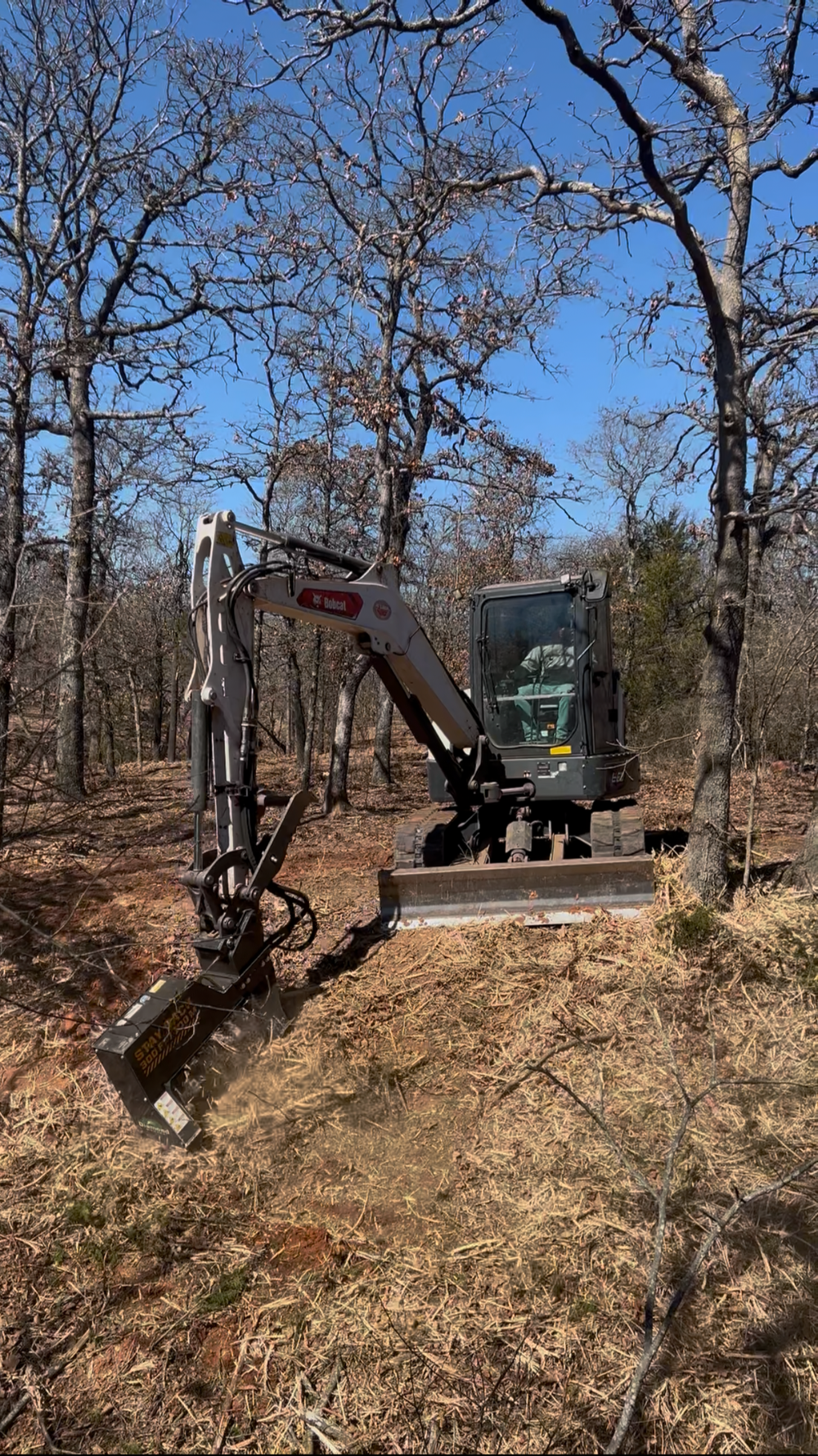
There are two main types of forestry mulchers: skid steer-mounted and excavator-mounted. Most land clearing companies only run one. Clear Path runs both — which matters more than most people realize.
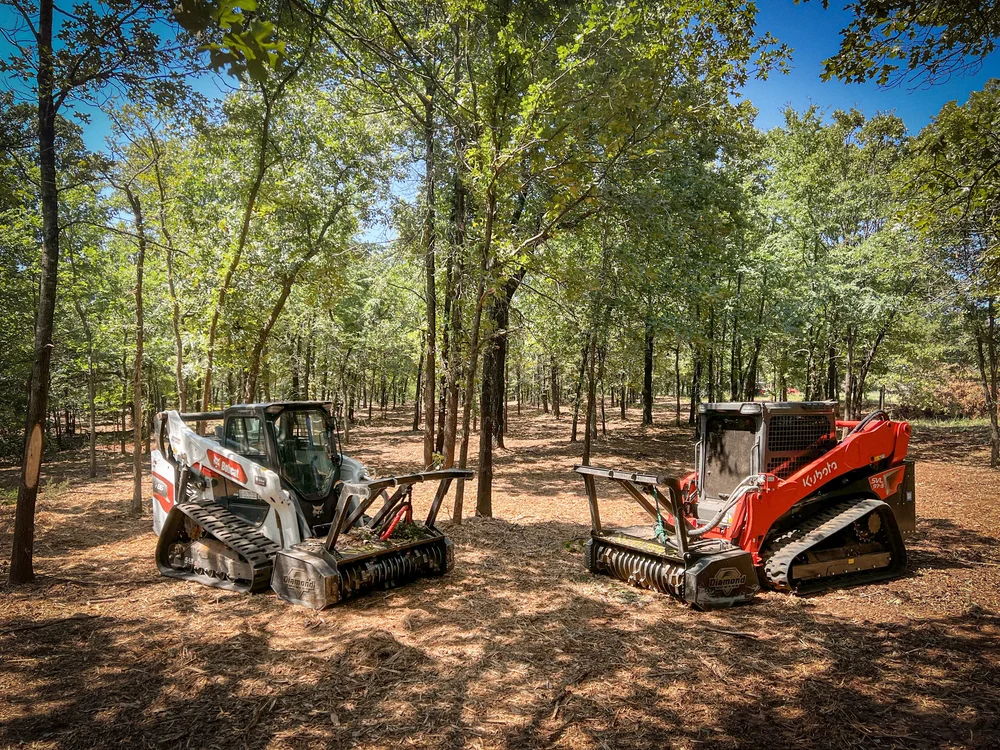
A skid steer mulcher is fast, maneuverable, and ideal for flat to moderately sloped terrain, residential lots, pasture, and fence lines. It's the right tool for the majority of Oklahoma clearing jobs.
An excavator mulcher has an extended arm that reaches into steep ravines, creek banks, and rough terrain that a skid steer physically can't access safely. Cedar loves to grow in these spots — draws, creek bottoms, hillsides — and without an excavator, those areas go untouched.
Most companies only bring one machine. We bring both.
When a company only has a skid steer, they skip the hard spots — the creek banks, the ravines, the steep draws where cedar is worst. We bring the excavator for exactly those areas, which means we can finish jobs that other crews can't.
Best Uses
When Forestry Mulching Is the Right Call
- Pasture reclamation — cedar and brush taking over your grazing land
- Residential lot clearing — clearing a wooded lot before building a home
- Cedar control — eastern red cedar removal before it spreads further
- Fence line clearing — removing overgrowth along property boundaries
- Hunting land improvement — food plots, shooting lanes, ATV trails
- Homesite prep — clearing land for construction without destroying topsoil
- Creek bank clearing — overgrown banks and draws (excavator required)
- Storm damage cleanup — grinding downed trees and debris after severe weather
Common Questions
Forestry Mulching FAQ
Does forestry mulching remove stumps?
Yes — the mulcher grinds stumps down to ground level or slightly below as part of the normal clearing process. This is one of the big advantages over cutting: there's no stump left standing. Stumps ground to grade are far less likely to resprout than stumps left at 12–18 inches, which is typical with chainsaw cutting.
Does the mulch attract termites or pests?
This is a common concern and the short answer is no — not in any meaningful way. The mulch layer breaks down relatively quickly in Oklahoma's climate and doesn't create the sustained moisture environment that attracts termite colonies. Keep mulch several feet from any structures and you'll have no issues.
Can you mulch around trees I want to keep?
Absolutely. Selective clearing is one of our specialties. Walk the property with Cole before work starts, mark the trees you want preserved, and we'll work around them carefully. This is especially popular on hunting properties, home sites with mature shade trees, and ranch land where native oaks are worth keeping.
How much does forestry mulching cost in Oklahoma?
Forestry mulching in Oklahoma typically runs $1,800–$5,000+ per acre depending on brush density, tree size, terrain, and access. We provide free on-site estimates so you get an accurate number based on your actual property. Call Cole at (405) 259-6682.
Ready to See What Forestry Mulching Can Do for Your Land?
Free on-site estimate. Cole walks the property with you before anything starts.
(405) 259-6682 Request a Free Quote →