Eastern Red Cedar Is
Taking Over Oklahoma Land
It spreads silently, kills your pasture, drinks your water table dry — and most landowners don't act until it's a serious problem. Here's what's actually happening and how to stop it.
Get a Free Cedar Quote →The scale of the problem
Oklahoma has lost millions of acres of native grassland to cedar encroachment — and it's accelerating every year.
What Cedar Does to Your Land
Cedar Isn't Just an Eyesore — It's Destroying Your Property
Eastern red cedar is native to Oklahoma but has become one of the most aggressive invasive species on Oklahoma pastureland. Left unchecked, it takes over everything.
Drains Your Water Table
A mature cedar stand can consume tens of thousands of gallons of water per acre per day — water that should be feeding your grass, your ponds, and your soil.
Kills Native Grass
Cedar's canopy shades out everything below it. Native grasses, wildflowers, and forbs can't survive underneath a cedar stand. Once it closes in, the ground goes bare.
Destroys Wildlife Habitat
Whitetail, quail, turkey — all rely on native grassland and open understory. Dense cedar replaces that habitat with a dark, dead canopy that supports almost nothing.
Tanks Property Value
Cedar-choked land is hard to lease, hard to sell, and hard to build on. Cleared land commands higher prices and better lease rates — sometimes dramatically so.
See the Difference
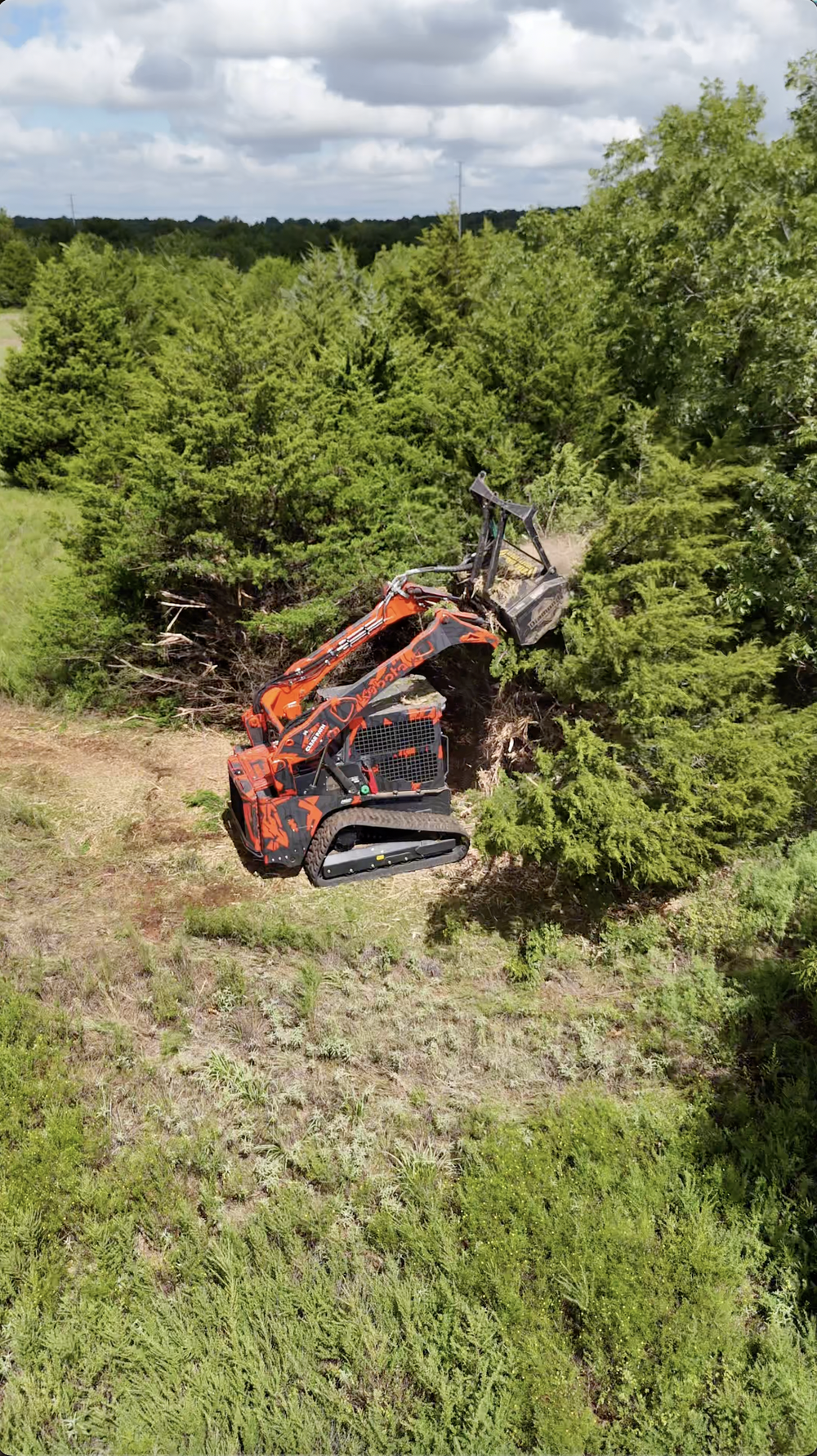
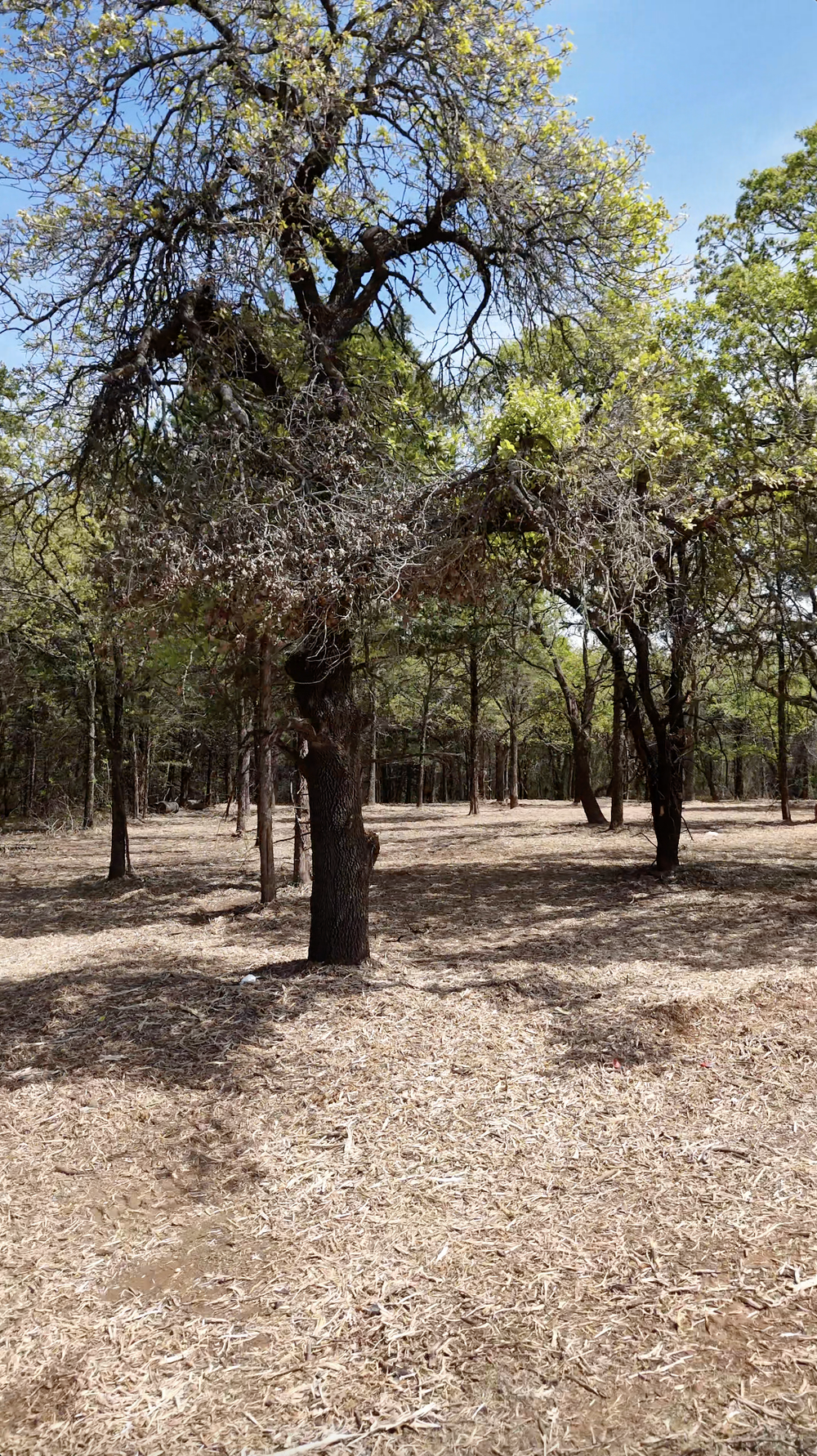
What Cedar Clearing Actually Looks Like
These are real Clear Path jobs from central Oklahoma.
Common Misconception
Why Burning Doesn't Fix Established Cedar
Prescribed burning has its place — but it's not the answer for most Oklahoma cedar problems.
Fire is effective at preventing young cedar from taking hold in open pasture. Once a cedar is taller than 4–5 feet with a trunk larger than 2–3 inches, it becomes increasingly fire-resistant. Mature cedar often survives low-intensity burns entirely — and the heat can actually trigger seed germination, leading to more cedar after the burn, not less.
Burning is a preventative tool. Mulching is the cure.
If your cedar is already established — taller than your truck, spreading toward the treeline — fire isn't going to solve it. Forestry mulching physically eliminates the plant, grinds the stump, and dramatically slows regrowth. That's the only method that actually turns the tide on a mature cedar problem.
The Right Solution
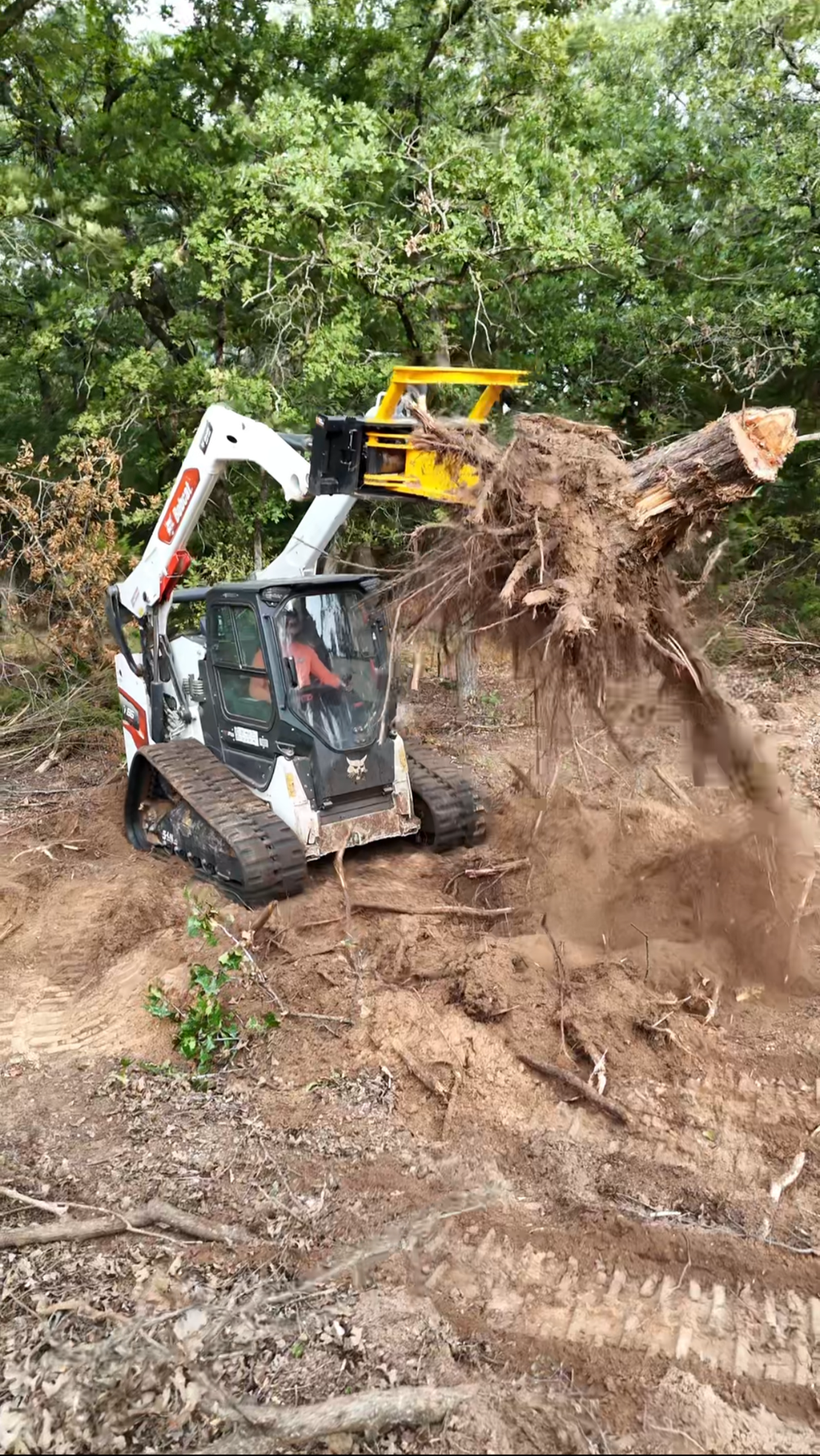
Why Forestry Mulching Is the Most Effective Cedar Treatment
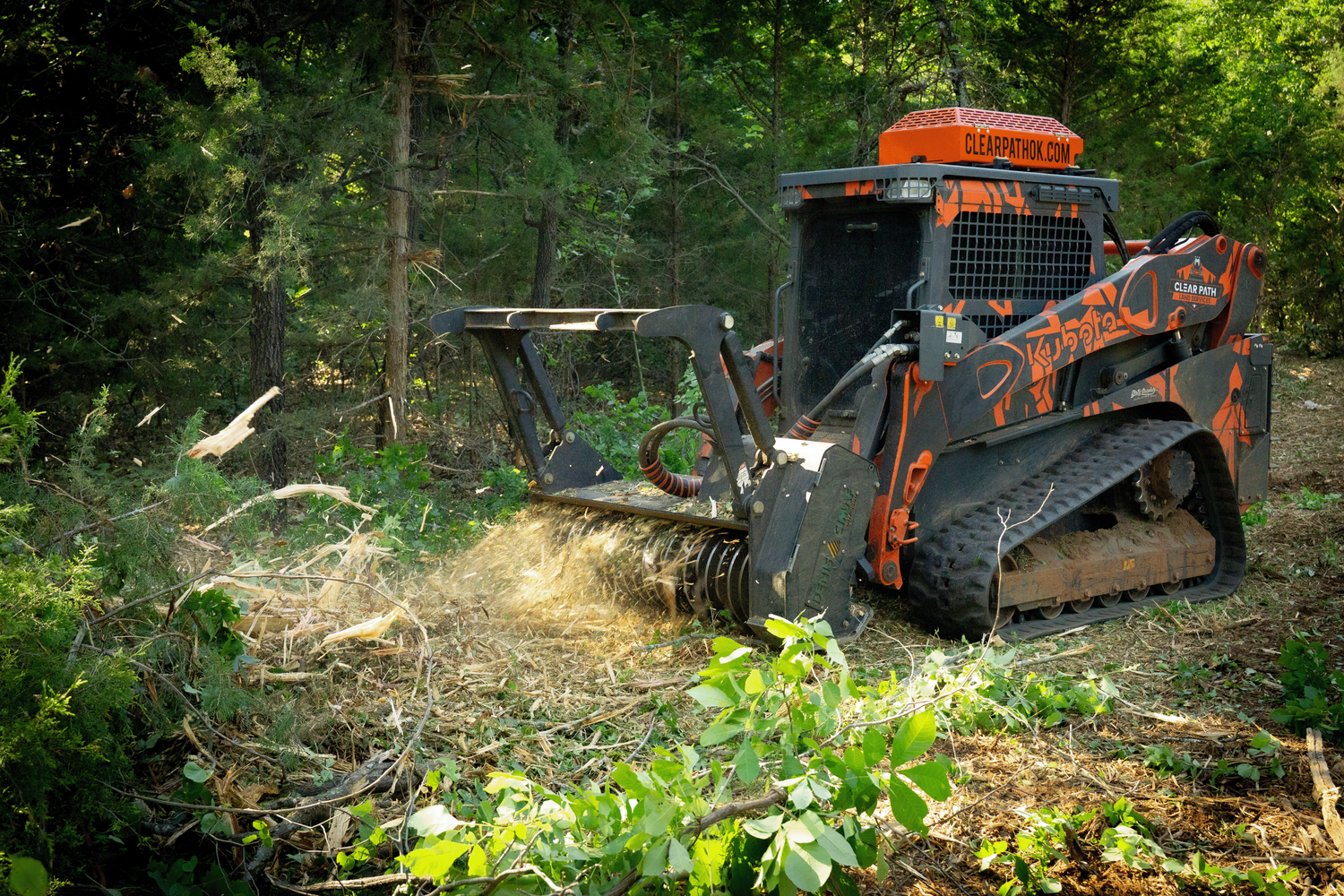
- Grinds the entire tree — trunk, limbs, and root crown — in one pass
- Stumps flushed to ground level, dramatically slowing regrowth
- No burn piles, no hauling, no mess left behind
- Roots stay in ground — no erosion control required
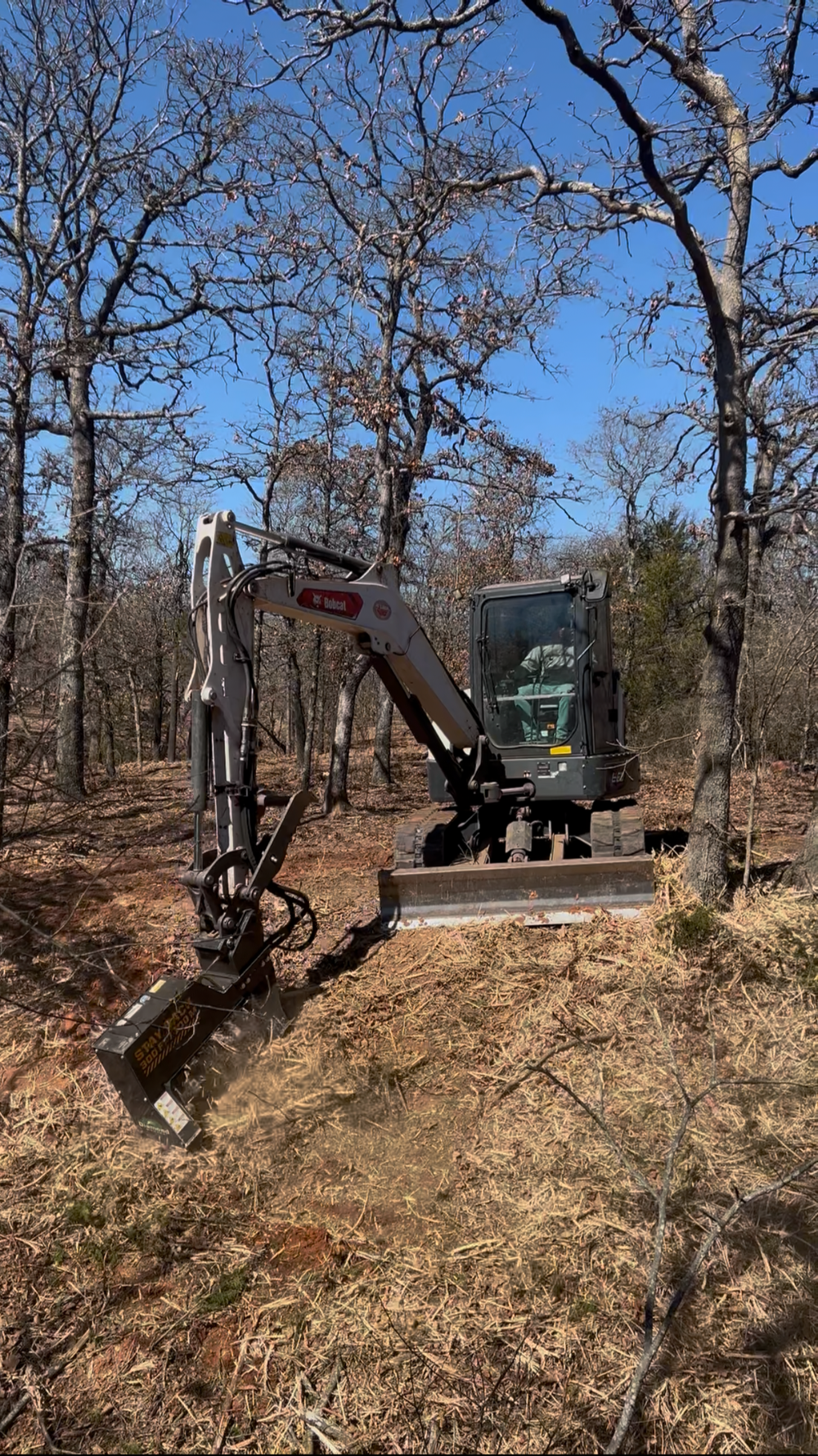
- Works in ravines, creek banks, and steep slopes with excavator attachment
- Works any time of year — no burn bans, no weather windows to wait for
- Mulch layer left behind feeds the soil and helps native grass recover
We run both a skid steer and excavator-mounted mulcher.
Cedar loves to grow in draws, creek banks, and steep slopes — places a skid steer can't safely reach. Our excavator-mounted mulcher gets into those spots with extended reach, clearing terrain that most other Oklahoma land clearing companies can't touch.
Timing Matters
Light Stand vs. Established Problem — The Cost Difference Is Real
The longer you wait on cedar, the more expensive the fix gets. Here's what each stage looks like.
🌱 Light to Moderate Cedar
Trees under 8–10 feet tall, scattered across pasture or starting to push in from treelines. The mulcher moves fast through this.
This is the least expensive stage to clear. Native grass can bounce back quickly once cedar competition is removed. If you're at this stage, now is the right time.
🌲 Dense, Established Stands
Mature cedar with trunks over 12 inches, canopy that's closed in, little to no grass underneath. The equipment can handle it, but it takes more time and cost per acre.
Grass recovery takes longer after a dense stand is cleared — but the turnaround is still dramatic. Many landowners are surprised how fast native grass comes back once cedar is gone.
Clear cedar early — it's significantly cheaper than waiting.
A light cedar stand costs a fraction of what a mature, dense infestation costs to clear. If you can see cedar spreading on your property right now, getting ahead of it will save you real money — and preserve your native grass in the process.
Common Questions
Cedar Questions We Hear All the Time
Will cedar grow back after mulching?
Some regrowth from the root crown is possible, but it's much slower than after burning or cutting. Forestry mulching grinds the stump down to ground level which significantly disrupts the plant's ability to resprout. Most landowners see far less regrowth compared to any other method, and any sprouts that do come back are small and easy to manage early.
Can you mulch cedar in creek bottoms and ravines?
Yes — that's exactly what our excavator-mounted mulcher is built for. Cedar loves to establish in draws and creek banks where fire and skid steers can't reach. Our excavator gets into those areas with extended reach, clearing spots that most companies simply can't touch.
Is it worth clearing cedar just for native grass recovery?
Almost always yes. Native grass recovery after cedar clearing is often faster and more dramatic than landowners expect. Within one to two growing seasons, native grasses typically return to cleared areas on their own — especially if the soil wasn't heavily disturbed. Recovered pasture leases better, supports more livestock, and holds more wildlife.
Does cedar clearing qualify for any cost-share programs in Oklahoma?
Yes. Oklahoma landowners may be eligible for cost-share assistance through the Oklahoma Conservation Commission's Invasive Woody Species program or through USDA's EQIP program, which covers cedar and other invasive species removal. We recommend contacting your local NRCS or conservation district office for details specific to your county.
How much does cedar clearing cost in Oklahoma?
Cedar clearing with forestry mulching typically runs $1,800–$3,000 per acre depending on density, tree size, terrain, and access. Light stands on flat ground price toward the lower end. Dense, mature cedar on rough terrain prices toward the higher end. We provide free on-site estimates so you get a number based on your actual property.
What's the best time of year to clear cedar in Oklahoma?
Fall and winter are ideal — ground conditions are typically firmer, there's no fire ban concern, and there's less stress on surrounding vegetation. That said, forestry mulching works year-round. If you're ready, we can schedule any time.
Cedar Taking Over Your Land?
We'll come out, walk the property with you, and give you a straight quote. Free on-site visit, no obligation.
(405) 259-6682 Request a Free On-Site Visit →